Patients of Melvin R. Helm, M.D.
As you may already know, due to the tragic and unexpected passing of Dr. Helm, his practice located at 1865 E. Alluvial, Suite 102, Fresno, CA 93720 has been closed as of December 28, 2021. On behalf of Dr. Helm and all of the staff at the Headache and Balance Center, we thank you for your support over the years.
For patients who are unaware of the closing or who are looking to schedule an appointment in the future, please contact your primary care provider to discuss a referral to a new physician.
For patients who have not already requested their records, your health records will be transferred to Morgan Records Management, LLC (the “Records Custodian”). The Records Custodian will continue to maintain your records in accordance with applicable confidentiality and security standards and with other applicable laws. Your records will be destroyed no less than 10 years after the last date of services you received from Dr. Helm’s practice. If you wish to have a copy of your records sent to you or to another provider or facility, you may submit a written request to this office at this time, or to the Records Custodian after the Effective Date. Requests to the Records Custodian, after the Effective Date should be directed to:
Morgan Records Management: Medical Records
Please Note
- In accordance with applicable state law, there may be a nominal fee charged for transfer of records.
- There may be a transition period from the time you receive this letter to the time Morgan Records Management has access to Dr. Helm’s charts.
If you have any questions regarding any of the above, please leave a voicemail at my office and somebody will try to return your call.
Sincerely,
Melvin R. Helm, Sr., President
Melvin R. Helm, MD., Inc.
For any questions or information
please email: drmelvinhelm@gmail.com
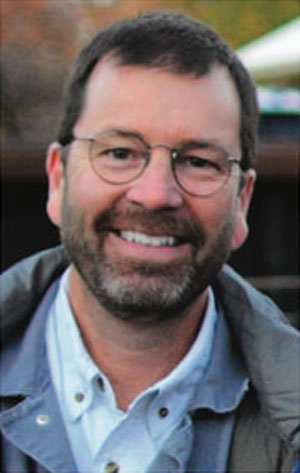
In Memory Of
Dr. Melvin R. Helm Jr.
January 24, 1966 - December 24, 2021.
Doctor Melvin R. Helm Jr. was born January 24, 1966 and passed away unexpectedly December 24th, 2021 while scuba diving.
Mel (as his friends and family knew him) held a vast list of accomplishments, but the greatest joy in his life was being the father to his three daughters, Isabella, Gabriella and Madeline. He is also survived by his loving fiancé Lavinia Terra of Clovis, his parents Melvin and Janice Helm, his sister Tracy Bratton, his niece and nephew Taylor and Travis Lindenmuth, all of Caruthers.
Mel attended Caruthers schools where he is remembered by his classmates for his quiet humor as well as his amazing Elvis impersonations at the talent show each year. In High School, Mel was a friend to all. He was an active trumpet player in the band, involved in many school clubs and was captain of the varsity tennis team.
After graduating from Fresno State University, Mel went on to earn his medical degree from Universidad Autonoma de Guadalajara. While in Mexico, he taught himself Spanish in less than a year and graduated at the top of his class.
Mel was a Board-Certified Neurologist who trained at Albert Einstein College of Medicine in New York City. After finishing Medical School, he returned to his Central Valley roots where he opened the California Headache & Balance Center in Fresno. Mel's medical practice is the only clinic in central California that specializes in difficult headache problems as well as conditions related to dizziness and imbalance. He was a well-respected doctor of neurology and will be greatly missed by his many patients as well as the Central Valley medical community.
Mel was also a member of the Advisory Board for the College of Science and Mathematics at Fresno State University.
Med had a lifelong interest in astronomy and astrophotography. In 2007 he co-founded and served as co-president of Sierra Remote Observatories (SRO), a large group of astronomical observatories located in California's Sierra Nevada Mountains. Mel's passions for space as well as the ocean began as a child. He was a Certified Dive Master, Master Scuba Diver, Self-Reliant Diver, and Enriched Air Diver.
A memorial celebration of Melvin's life was held at New Covenant Community Church on Saturday, January 8th, 2022 at 1:00 pm. The church is located at 1744 E. Nees Ave. in Fresno.
